


Neurofeedback
MethodA technique of self-regulation of brain activity that teaches you how to manage your own focus, emotions and states of consciousness.
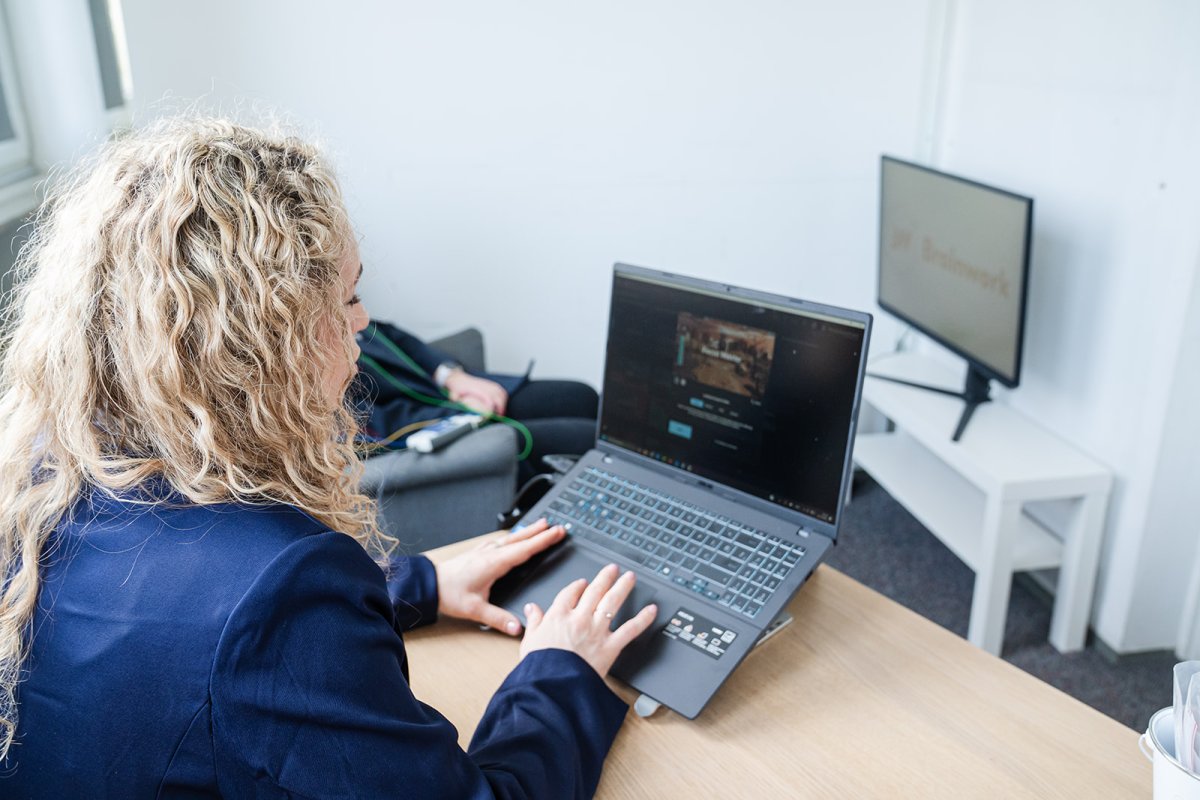
The scientific basis of the method
Neurofeedback
Our brain, the most complex and powerful computing system on the planet, governs all aspects of our being, including our personality, temperament, emotions, and executive functions.
Various methods, such as solving crosswords, navigating mazes, tackling puzzles, and learning new languages and skills, indirectly enhance brain function. But what if we could directly train the areas of the brain that are "weaker"?
The basic tool for neurofeedback
EEG
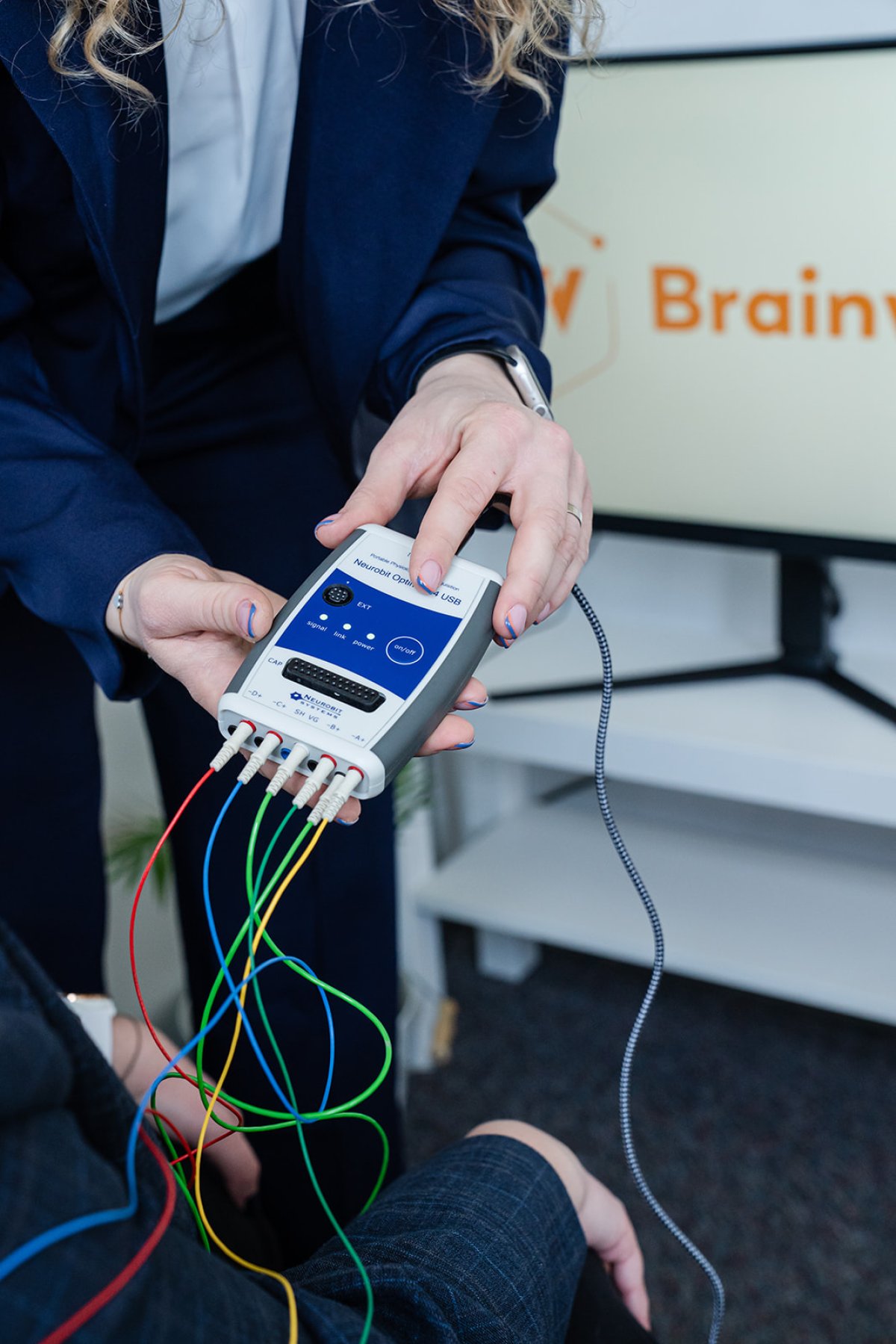
The basic tool for neurofeedback is the electroencephalogram (EEG). This non-invasive brain imaging technique allows for real-time monitoring of mental states through brain waves.
Neurofeedback is a type of biofeedback method that uses feedback on the brain's electrical activity to normalize and optimize cognitive and emotional processes. Essentially, it is applied neuroscience. The term EEG biofeedback is also used to specify the type of feedback being provided. Neurofeedback is a method that has emerged from scientific laboratories and research, and it is fully based on scientific principles.
EEG frequencies
Five brain waves, five states of consciousness.
Delta
1 – 4 Hz
Deep sleep and recovery — regeneration, unconscious processes.
Theta
4 – 8 Hz
Deep relaxation — intuition, emotional learning, dreaming.
Alpha
8 – 12 Hz
Relaxed, creative state — calm wakefulness, meditation, flow.
Beta
12 – 35 Hz
Awake, concentrated state — focus, problem-solving, attention.
Gamma
35 – 45 Hz
Highest cognitive activity — learning, memory, perception.
process
What does a cycle look like.
01
Initial assessment
Discussion of goals, medical history, baseline imaging and assessment of the condition. Based on this, we put together an individual training protocol.
02
Trainings (20 – 40 matches)
Individual sessions 2-3 times a week. Each lasts about 45 minutes. The brain gradually learns new patterns of activity through visual and auditory feedback.
03
Evaluation and consultation
After 20 trainings, we conduct an evaluation recording and analyse the progress. Each meeting also includes a counselling dimension with a psychologist.
Evaluation
An evaluation recording at the 20th session, compared with the baseline recording, gives insight into the results achieved, together with a written report. The same process is repeated at the end of the training.
Consultation
At the 15th session we hold a dedicated counselling meeting (without training) — analysis of behavioural changes, experiences and, if needed, referral to partner specialists.
Who it is for
Clinical psychology, education, sports performance and the enhancement of cognitive abilities. For children from the age of 4 and for adults, including older people.
Frequency
Optimally 2–3 sessions per week. The total number depends on your goals — the average is 20–40 sessions for lasting results.
Assessment
An interview with the therapist, a functional questionnaire, a baseline EEG recording and, if needed, additional biofeedback methods.
Begin your journey toward an optimal brain.
Every journey starts with a conversation. Get in touch — our team of psychologists will help you understand what the best next step is for you.